
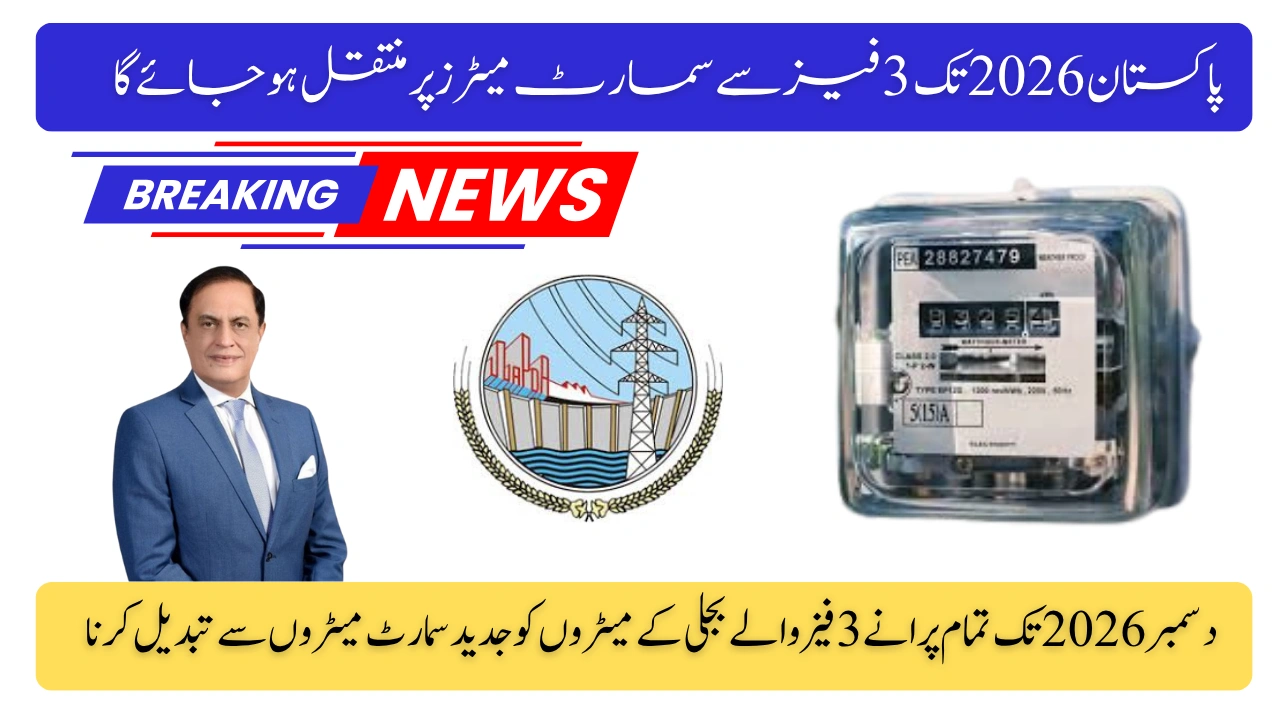
Pakistan is preparing for one of the biggest changes in its power sector: replacing all old 3-phase electricity meters with modern smart meters by December 2026. This transformation is part of a national drive to improve transparency, reduce power theft, and make billing more accurate for every household and business.
The Ministry of Power has confirmed that this shift will be carried out under a major digital modernization plan, marking a major upgrade to Pakistan’s outdated electricity infrastructure.
Why the Shift to Smart Meters?
For years, consumers have faced problems like overbilling, delayed meter reading, and frequent complaints of theft and tampering. Smart meters aim to solve all of these issues in one go.
What Exactly Are Smart Meters?
Smart meters are advanced digital devices that track electricity use in real time. Unlike traditional meters that require manual reading, smart meters automatically send data to the electricity company.
Key Benefits:
-
Accurate billing with zero “guess estimates”
-
Automatic data sharing — no meter reader required
-
Detection of theft and tampering
-
Usage tracking through apps
-
Fewer billing disputes and faster complaint resolution
In simple words, smart meters ensure you only pay for what you actually use.
Phase One: 350,000 Smart Meters for Lahore
The rollout will begin with 350,000 smart meters in the LESCO (Lahore Electric Supply Company) region. This first stage focuses on areas with high losses and frequent complaints.
According to the government’s plan:
-
LESCO will be the first distribution company to start installation
-
The initial cost will be covered by LESCO
-
Areas with higher theft rates will be prioritized
-
Later phases will expand to cities and industrial areas
This gradual approach helps maximize impact while reducing disruptions.
Deadline: December 2026
All electricity distribution companies (DISCOs) have been instructed to complete the transition by December 2026. This means that within a little over a year, millions of traditional 3-phase meters will be phased out.
The rollout strategy includes:
-
Starting from high-theft regions
-
Moving to dense urban areas
-
Expanding to commercial and industrial zones
The goal is to build a smart, transparent, and digital electricity system across Pakistan.
Why Replace Old 3-Phase Meters?
Smart meters bring multiple long-term advantages for both consumers and power companies:
-
Stops electricity theft: The devices instantly detect illegal connections.
-
Ends overbilling: Real-time data helps prevent wrong or inflated bills.
-
Increases transparency: Consumers can monitor their own usage daily.
-
Saves energy: Users can adjust their consumption based on real-time updates.
-
Supports the Digital Pakistan vision: Modern infrastructure paves the way for future innovations.
The Financial Challenge
One major question is cost. Installing millions of smart meters requires billions of rupees. Power companies like LESCO will bear the initial expenses.
Key concerns include:
-
How DISCOs will manage such huge investments
-
Whether electricity tariffs may rise in the future
-
Availability of strong IT systems to support nationwide automation
However, experts say long-term benefits — especially reduced theft — will outweigh short-term costs.
What This Means for Consumers
For everyday users, the switch to smart meters brings several improvements:
-
No more bill shocks from “estimated readings”
-
Detailed usage data available through mobile apps
-
Faster resolution of complaints
-
Better control over monthly electricity expenses
Smart meters are expected to rebuild trust between consumers and distribution companies.
Challenges Ahead
Despite the promising benefits, the project comes with hurdles:
-
Rural areas may lack digital infrastructure
-
Many users may resist new technology due to lack of awareness
-
DISCOs must train staff for installation and maintenance
-
Proper coordination is required across provinces
To overcome these challenges, strong public awareness campaigns will be essential.
Final Thoughts
Pakistan’s decision to replace traditional 3-phase meters with smart meters marks a turning point for the country’s energy sector. If completed by the December 2026 deadline, millions of consumers will benefit from fair billing, better transparency, and a modern power system.
This shift is more than just a technology upgrade — it is a step toward a smarter, more efficient, and future-ready Pakistan.
FAQs
Q1: What is the official deadline for smart meter installation?
The government has set December 2026 as the final deadline.
Q2: Which company will start the installation?
LESCO (Lahore Electric Supply Company) will lead the first phase with 350,000 smart meters.
If you’d like, I can also create:
✅ A shorter version for Google Discover
✅ A headline pack with 10 SEO-optimized titles
✅ A feature snippet–style summary for top ranking