
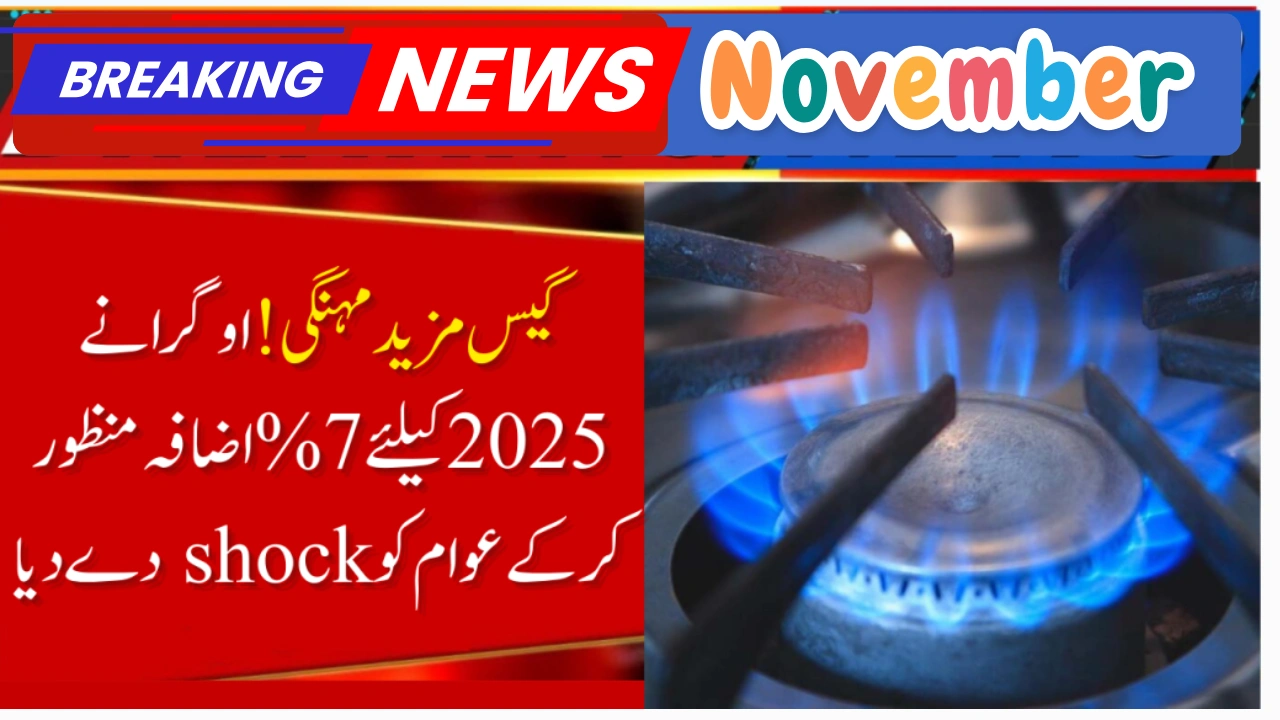
Pakistan’s gas consumers are once again preparing for higher bills as the Oil and Gas Regulatory Authority (OGRA) has approved a price hike of up to 7% for the fiscal year 2025–26. The decision aims to support the financial needs of Sui Northern Gas Pipelines Ltd (SNGPL) and Sui Southern Gas Company Ltd (SSGCL), ensuring the country’s gas supply chain remains stable. Here’s what this increase means, why it was approved, and how it could affect households and industries across Pakistan.
Why OGRA Approved the Price Increase
OGRA’s latest determination is part of a broader effort to keep the gas sector financially healthy. Both SNGPL and SSGCL together require around Rs. 886 billion to continue operations without falling into deeper deficits.
-
SSGCL has been allowed an average prescribed price of Rs. 1,777 per mmBtu, reflecting a 7.11% increase.
-
SNGPL has been allowed a prescribed price of Rs. 1,853 per mmBtu, marking a 5% increase.
These revised prices help both companies recover rising operational expenses and align with the government’s commitments to international lenders such as the IMF.
Why Gas Prices Are Rising in 2025
This year’s increase doesn’t come as a surprise. The government has already been adjusting gas tariffs to meet revenue targets and stabilize the energy sector. Earlier, fixed charges were raised by 50%, and commercial and industrial consumers saw rate hikes of up to 17%.
These adjustments were introduced to:
-
Reduce the financial gap in the gas sector
-
Recover consumer costs previously absorbed by the government
-
Meet IMF-related reforms that demand full cost recovery
-
Control the ever-growing circular debt, which has crossed Rs. 3 trillion
The newly approved hike is another step toward ensuring that the sector becomes economically sustainable.
What This Means for Consumers
While OGRA has determined the prescribed prices, the final decision on what consumers will actually pay now lies with the federal government. Officials may choose to:
-
Raise end-user gas rates further
-
Increase fixed monthly charges
-
Adjust slabs to distribute the burden more evenly
Households may experience slightly higher utility bills, but commercial and industrial sectors—already paying higher rates—may feel the impact more strongly.
OGRA also adjusts gas tariffs twice a year, meaning prices could change again depending on global energy conditions and domestic needs.
How Gas Prices Are Set Across Pakistan
Gas prices in Pakistan follow a uniform national system. The government typically adopts the higher prescribed price between SNGPL and SSGCL to ensure equal rates nationwide. Any revenue difference then becomes part of the Gas Development Surcharge (GDS) collected by provinces.
OGRA has stressed that every consumer category—from household to industrial—must at least cover the average cost of service to maintain the sector’s viability. This ensures that gas companies avoid further financial losses and are able to maintain supply.
Stopping the Growth of Circular Debt
Circular debt has long been one of Pakistan’s biggest challenges in the energy sector. To address this, the government has committed to issuing timely biannual notifications of gas rates.
This prevents delays that often lead to large financial shortfalls for gas companies. Under the rules, the government must respond to OGRA’s decisions within 40 days, ensuring new rates take effect without unnecessary lags.
Key Takeaways
-
OGRA has approved up to 7% increase in gas prices for 2025–26.
-
Combined revenue requirement: Rs. 886 billion for SNGPL and SSGCL.
-
Consumers may face higher bills depending on government decisions.
-
Tariffs will continue to be adjusted twice a year.
-
The changes support IMF commitments and help control circular debt.
Conclusion
The new gas price hike is part of a broader plan to stabilize Pakistan’s energy sector. While the increase may raise costs for households and businesses, it also helps ensure that gas companies can continue operating without deeper losses. As the government takes steps to improve financial sustainability, consumers should stay informed and plan for upcoming changes in energy expenses.
Keeping track of tariff updates and understanding how these decisions are made can help both individuals and industries prepare better for the evolving energy landscape in 2025.